
Starting your journey in finance and investing can be thrilling and a bit scary. This guide is here to help you, whether you’re new to finance or want to learn more. It offers the key tools and strategies for the world of personal finance and investing.
This step-by-step guide covers the basics of finance and various investment options. It aims to give you the knowledge to make smart choices and manage your money better. You’ll learn how to build wealth, reduce risks, and reach your financial goals, all while having fun.
Let’s start exploring the ways to improve your finance and investing skills. Get set for an exciting journey that will help you take control of your money.
Demystifying the World of Finance and Investing
Understanding finance basics and investing fundamentals can seem tough, but don’t worry! We’re here to simplify the key concepts and terms for you. This way, you can unlock the secrets of the financial world.
At the core of personal finance education is learning about financial tools. We’ll look into stocks, bonds, and mutual funds. Knowing these basics helps you make smart choices and create a portfolio that fits your goals.
The stock market might seem scary, but it’s key to investing fundamentals. We’ll make it clear how the stock market works and what affects it. With this info, you can handle market changes and plan your investments for the long term.
Finance basics and personal finance education are for everyone, not just experts. They help you make smart decisions and reach your financial dreams. By grasping the basics, you’re on your way to a brighter financial future.
“The secret to getting ahead is getting started.” – Mark Twain
Establishing Your Financial Goals
Setting your financial goals is the key to financial success. You might want to grow your wealth, save for a big purchase, or plan for retirement. Having clear goals is vital. We’ll help you set both short-term and long-term financial planning goals. This ensures your investment matches your goals.
Short-Term Goals
Your short-term financial goals are for the next 1-5 years. They might include:
- Paying off high-interest debt
- Building an emergency fund with 3-6 months’ expenses
- Saving for a down payment on a home
- Funding a vacation or a big purchase
Working on these goals gives you a sense of progress and momentum.
Long-Term Goals
Your long-term financial goals look ahead 5-10 years or more. They could be:
- Saving for a comfortable retirement
- Investing in your children’s education
- Building a diverse investment portfolio
- Reaching financial independence
Creating a strong financial goal setting plan helps you make smart choices. It keeps you motivated towards financial success.
“The journey of a thousand miles begins with a single step.” – Lao Tzu
Understanding Your Risk Tolerance
Finance and investing can be exciting but also a bit scary. It’s important to know how much risk you can handle. This is called your risk tolerance. It’s key to making good investment choices.
When you assess risk, you look at the possible losses or ups and downs in your investments. Investment risk is the chance you might lose money or see the value of your assets go up and down. Knowing your risk tolerance helps you choose the right level of risk management. This way, your investments match what you’re comfortable with and your goals.
| Risk Tolerance Level | Investor Characteristics | Suitable Investment Strategies |
|---|---|---|
| Low | Conservative, risk-averse, prioritizes capital preservation | Bonds, cash, low-volatility assets |
| Moderate | Balanced approach, willing to accept some volatility for potential growth | Diversified portfolio, mix of stocks and bonds |
| High | Aggressive, comfortable with significant fluctuations in pursuit of higher returns | Stocks, alternative investments, higher-risk assets |
Knowing your risk assessment and how much risk you can handle helps you make smart choices. This knowledge is crucial for a strong, varied portfolio. It can handle market changes and help you reach your financial goals.
“The essence of investment management is the management of risks, not the management of returns.” – Benjamin Graham
Building an Emergency Fund
An emergency fund is key to a strong financial plan. It acts as a safety net, protecting you from sudden costs that could mess up your budgeting and financial goals. We’ll look at why an emergency fund is important and how to build and keep it.
Determining the Ideal Amount
The right amount for your emergency fund depends on your situation. Aim to save three to six months’ expenses. This amount helps you handle job loss, medical bills, or other surprises without touching your long-term savings or getting into debt.
Strategies for Saving
Building an emergency fund might seem hard, but with some smart savings strategies, you can do it. Here are some tips:
- Automate your savings: Set up automatic transfers from your checking to a savings account for emergencies.
- Allocate windfalls: Use unexpected money, like tax refunds or bonuses, for your emergency fund.
- Trim your personal finance budgeting: Cut back in your budget to save more for emergencies.
- Increase your income: Look for side jobs or freelance work to add to your emergency fund.
With these savings strategies, you can grow a strong emergency fund. This gives you peace of mind and financial strength when things get tough.
| Emergency Fund Size | Recommended Minimum | Ideal Target |
|---|---|---|
| Individual | $1,000 | 3-6 months’ expenses |
| Household | $2,000 | 3-6 months’ expenses |
“An emergency fund is the foundation of a solid financial plan. It’s the first step towards achieving financial security and resilience.”
Tackling Debt Strategically
Debt can block your way to financial freedom, but you can beat it with the right strategies. Whether you’re dealing with credit card debt, student loans, or other debts, this section will give you the tools to manage your debt well. It will help you take control of your finances and move towards a debt-free future.
Prioritizing Your Debts
Start by looking at your finances and figuring out which debts to tackle first. Make a list of all your debts, including interest rates, minimum payments, and balances. This will show you which debts to pay off first, based on interest rates and how they affect your finances.
Implementing the Debt Snowball Method
The debt snowball method is a great way to manage debt. It means paying off the smallest debt first while still making minimum payments on others. When you pay off a debt, use that money to tackle the next one. This creates a snowball effect that speeds up your debt repayment.
Negotiating with Creditors
Don’t hesitate to talk to your creditors. You might be able to get lower interest rates, reduced fees, or temporary payment breaks. By talking to your creditors and showing you’re serious about managing your debt, you can often get better terms. This can make your debt easier to handle.
Tackling debt takes time and effort, but it’s worth it. With patience and the right strategies, you can take back control of your finances. Stay focused, celebrate your successes, and let your journey in debt management and debt repayment show your financial strength.
Exploring Investment Vehicles
Starting your investment journey means looking at the different options you have. Stocks, bonds, and mutual funds each have their own risks and rewards. Let’s look at these options closely.
Stocks
Investing in the stock market means buying shares of companies. These shares can grow in value, giving you a chance for profit. You might also earn money from dividends. But, remember, stock prices can go up and down a lot.
Bonds
Bonds are like loans to governments or companies. When you buy bonds, you lend money and get back interest. They are usually safer than stocks because their value doesn’t change as much.
Mutual Funds
Mutual funds let many investors pool their money together. They buy a mix of stocks, bonds, or both. Mutual funds are good for those who want professional help with their investments. They offer a variety of investment options in one place.
| Investment Vehicle | Key Characteristics | Potential Rewards | Risks |
|---|---|---|---|
| Stocks | Ownership in publicly-traded companies | Capital appreciation, dividend income | Volatility, market fluctuations |
| Bonds | Debt instruments, fixed or variable interest payments | Stable, predictable returns | Interest rate risk, default risk |
| Mutual Funds | Pooled investment portfolios, diversification, professional management | Exposure to a wide range of investment options, potential for growth | Fees, market risk |
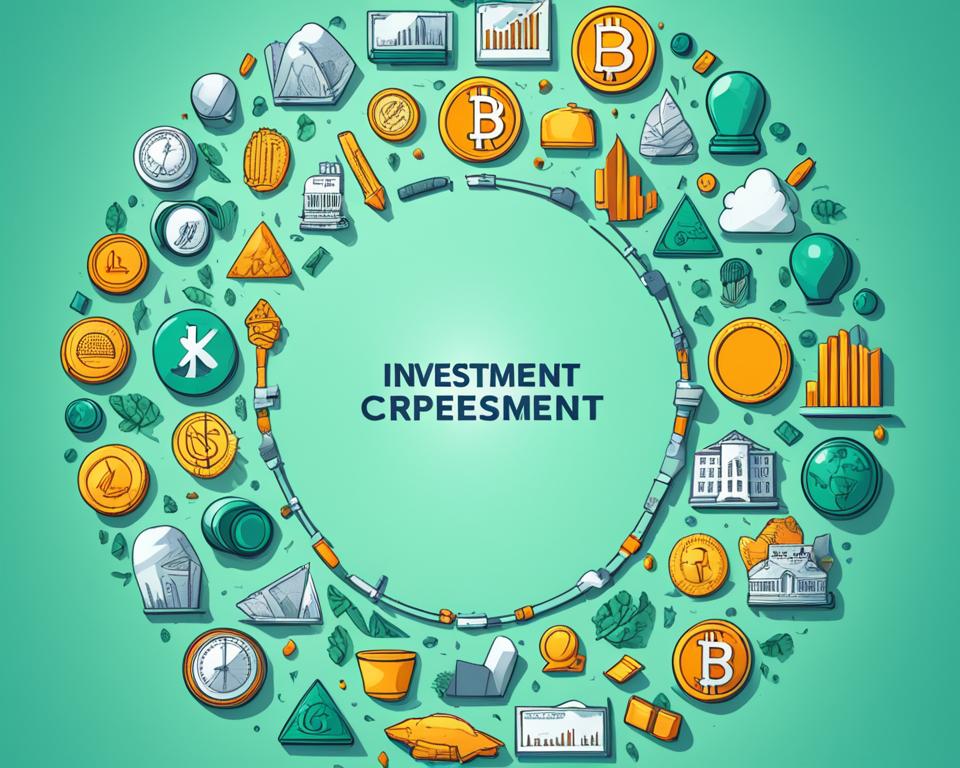
When picking your investment options, think about what you want to achieve. Look at the risks and rewards of stocks, bonds, and mutual funds. This will help you make smart choices and build a portfolio that meets your goals.
Diversifying Your Portfolio
Diversifying your investments is key in finance and investing. It helps spread your money across different types of assets. This can lower the risk of your investments and help you grow your money over time.
It means not putting all your money in one place. You spread it across stocks, bonds, real estate, and more. This way, if one investment does poorly, the others might do better, making your money safer.
The Benefits of Diversification
Diversifying your investments brings many benefits:
- Risk Reduction: By investing in various assets, you lessen the effect of market ups and downs on your money. If one investment falls, others might rise, balancing out your losses.
- Potential for Higher Returns: Spreading your money across different markets can lead to better long-term growth. You can take advantage of the best opportunities in each area.
- Balanced Investment Strategy: A diversified portfolio helps you stay on track with your financial goals, even when the market changes. It makes your investment strategy more stable.
Strategies for Diversification
Building a diversified portfolio takes time and effort. Here are steps to follow:
- Know your risk level and what you want to achieve.
- Put your money into different types of assets, like stocks, bonds, real estate, and more.
- Keep an eye on your investments and adjust them as needed to stay on track.
- Make sure each asset class has a mix of different areas and styles.
Using diversification can make your investment strategy stronger. It reduces risk and can lead to better financial success over time.
| Asset Class | Potential Benefits | Potential Risks |
|---|---|---|
| Stocks | Potential for capital appreciation, dividend income | Market volatility, individual stock risk |
| Bonds | Steady income, relatively lower risk | Interest rate risk, credit risk |
| Real Estate | Potential for capital appreciation, rental income | Property-specific risks, market conditions |
| Alternative Investments | Diversification, potential for uncorrelated returns | Higher risk, complexity, limited liquidity |
“Diversification is the only free lunch in investing.” – Harry Markowitz, Nobel Laureate in Economics
By using diversification, you can feel more confident about your investments. It helps you grow your money over the long term and keeps your investments stable.
Finance and Investing: A Lifelong Journey
Getting financially successful is not just a one-time thing. It’s a journey that never stops. We’ll talk about why it’s key to keep learning throughout your life. This is true for financial education and personal finance growth.
Finance and investing change all the time. What works now might not work later. You’ll need to adjust your plans as your needs and the market change. So, always be open to learning and growing.
Good investors see financial learning as a journey, not a goal. They always look for new info and trends. They keep improving their strategies to stay ahead. By doing this, you keep your investing mindset and personal finance growth strong and flexible.
“The more you learn, the more you earn.” – Warren Buffett
Your financial health is about more than today. It’s about setting up a strong base for the future. This could mean saving for retirement, helping your kids with school, or reaching your financial education goals. Keep investing in your investing mindset and keep up with finance changes. This way, you can handle market ups and downs with confidence and keep your personal finance growth going.
Embrace the journey, stay curious, and always be open to learning. Your financial future depends on it.
Embracing Compound Interest
Compound interest is the secret to successful investing. It turns small amounts into big fortunes over time. But, it needs one thing: time. By understanding compounding, you can build long-term wealth and reach your financial goals.
The Power of Time
Time is key in compound interest. The longer your money grows, the bigger the results. Saving early is crucial, whether for retirement or a dream trip. Even small, regular savings can grow a lot because of compound interest.
Reinvesting Returns
Compound interest works both ways – you must keep adding to it. Reinvesting your returns boosts your portfolio’s growth. The more you resist taking money out, the faster your wealth grows. This cycle rewards patience and discipline, turning savings into a wealth machine.